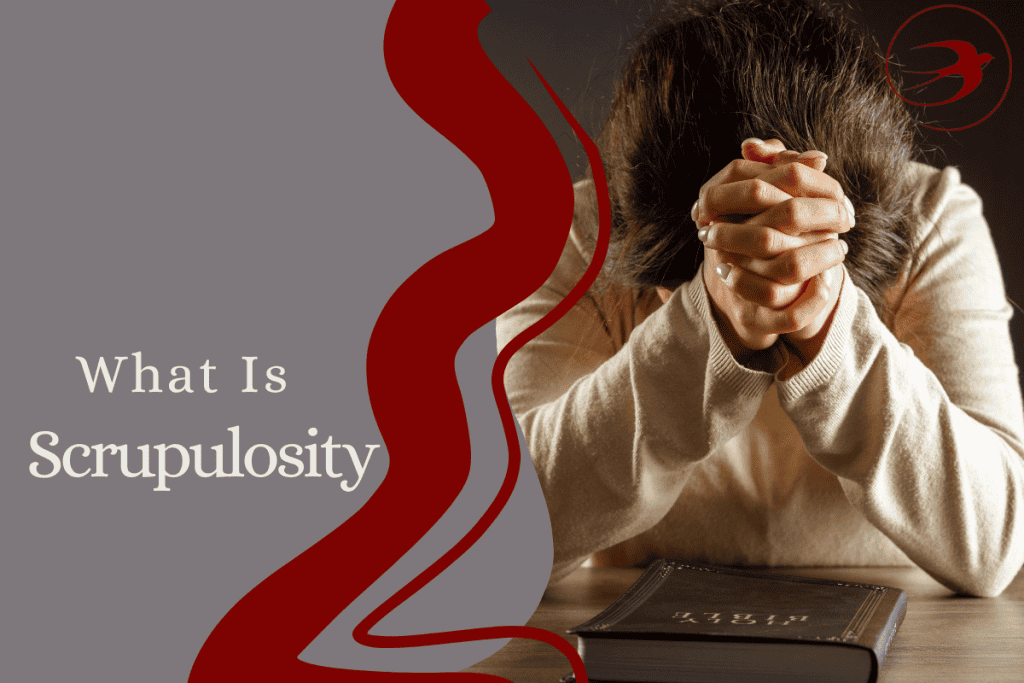
Scrupulosity can feel overwhelming, especially when your faith is deeply important to you. Many people who struggle with this feel confused, ashamed, or afraid to talk about it because they worry it means they are failing spiritually. If you’ve been carrying heavy guilt, fear of making a mistake, or constant worry that God is disappointed in you, please know this: you are not alone, and you are not broken.
Scrupulosity is a form of OCD that creates intense anxiety around faith, morality, and the idea of sin, even when nothing is actually wrong. It makes you question everything you do, think, or feel, and it often turns your spiritual practices into moments of fear instead of peace. Understanding what scrupulosity is helps you see that this struggle is not a sign of weak faith; it’s a mental health condition that can be treated with compassion, support, and patience.
This article will walk you through what scrupulosity is, how it shows up, why it happens, and how healing is possible through faith, therapy, and a healthier understanding of God’s grace. You deserve clarity. You deserve peace. And you deserve to know that God’s love meets you right here.
What Is Scrupulosity?
Scrupulosity is a type of obsessive-compulsive disorder (OCD) where a person becomes overly worried about sin, morality, or whether they’re “doing things the right way” in their religious practice. It shows up as a deep fear of disappointing God or accidentally doing something wrong, even when there’s no evidence of a real obsession or transgression. Many people with scrupulosity describe feeling stuck between their sincere faith and the constant distress of getting something in their spiritual life “wrong.”
It’s important to understand that scrupulosity is not a spiritual problem, it is a mental health condition rooted in obsessive fears and compulsive urges. This form of obsessive-compulsive disorder mixes anxiety with intrusive thoughts, causing the brain to send alarm signals even when you are spiritually safe and deeply loved. People with OCD may repeat prayers, engage in rituals, seek reassurance, or analyze every choice because their brain won’t let them rest. These compulsive behaviors come from fear, not a lack of faith, and recognizing this difference can offer immediate relief. With compassionate support and effective treatment for scrupulosity, peace and clarity become possible again.
Signs and Symptoms of Scrupulosity
Many people don’t realize they’re dealing with scrupulosity because the symptoms often hide inside their spiritual practices. What looks like being extra “devoted” or “careful” may actually be OCD-driven anxiety. You might second-guess your thoughts, replay conversations, or feel scared that you offended God without meaning to. These struggles can feel very real, especially when they involve moral or religious concerns.

Common signs include intrusive thoughts you don’t want, such as fears about blasphemy or worries that God is angry at you. These thoughts can create a cycle of compulsion, where you confess repeatedly, seek reassurance from religious leaders, or redo prayers and rituals to feel spiritually “safe.” This pattern shows up often in religious or moral themes that your brain latches onto as a threat.
Scrupulosity can also make you avoid activities you once enjoyed because they now feel spiritually risky or triggering. People who experience religious anxiety in this way often become exhausted by the constant checking, analyzing, and fear. Over time, these symptoms can pull you away from your faith community and drain the joy out of your relationship with God. With compassion and the right support to treat scrupulosity, it’s absolutely possible to find peace again.
What Causes Scrupulosity?
Scrupulosity can develop for many reasons, and none of them mean you’ve done anything wrong. For many people, it begins with underlying anxiety or OCD tendencies. In this type of OCD, the brain becomes overly alert to anything tied to faith or morality, which is why scrupulosity OCD and religious scrupulosity often show up around prayer, confession, or concerns about sin. These patterns are not signs of weak faith, they are signs of a mind overwhelmed by fear.
It can also be shaped by perfectionism, strict religious environments, or spiritual messages that focus more on punishment than compassion. When someone grows up hearing that even small mistakes bring serious consequences, the nervous system may develop moral or religious fears. Over time, these fears can turn into obsessions and compulsions, especially around “doing faith correctly.” Many individuals with scrupulosity describe trying to follow every rule perfectly because their brain interprets uncertainty as danger.
For others, scrupulosity may be influenced by past trauma or misunderstandings about God’s character. When someone learns to associate God with fear instead of love, their inner world becomes a place of pressure instead of peace. In these cases, the combination of anxiety, belief patterns, and spiritual experiences creates the nature of scrupulosity. Healing becomes possible when you understand that this struggle comes from how your brain responds to fear, not from a lack of devotion, and when you find support from a mental health professional who understands scrupulosity and OCD.
How Scrupulosity Impacts Daily Life and Faith
Living with scrupulosity can feel like walking on eggshells. Everyday decisions become stressful because you worry about making the “wrong” moral or spiritual choice. You might avoid certain activities, places, or conversations because they bring up fear or intrusive thoughts. Even normal moments, like resting, laughing, or making simple decisions, can feel heavy.
Spiritually, scrupulosity makes it hard to feel close to God. Instead of prayer bringing comfort, it may bring pressure. Instead of Scripture offering encouragement, it may feel like a mirror reflecting your fears. Over time, this can lead to exhaustion, confusion, and even spiritual burnout. But the truth is this: God is not asking you to live in fear. He is inviting you into rest, grace, and freedom.
Healing From Scrupulosity: Faith and Mental Health Working Together
Healing is absolutely possible, and you don’t have to choose between your faith and getting help. One of the most effective treatments is Cognitive Behavioral Therapy (CBT) and Exposure and Response Prevention (ERP), which helps your brain unlearn fear-driven patterns. Working with a therapist who understands faith-based struggles can make the process feel safe and supportive.
Healing also involves gently reframing how you see God. Scrupulosity often paints God as harsh, demanding, or quick to punish. But Scripture consistently shows us a God who is slow to anger, rich in love, and full of compassion. Learning grounding skills can also help calm your nervous system so your brain doesn’t stay stuck in “danger mode.” With time, support, and grace, your spiritual practices can become peaceful again instead of pressured.
Faith-Based Encouragement for Your Journey
If you’re struggling with scrupulosity, please hear this: God is not disappointed in you. Intrusive thoughts are not sins. Anxiety is not a lack of faith. And the battle you’re facing does not make you less loved or less whole.
God sees your heart. He knows the difference between fear and rebellion. He walks with you gently, even on the days when you feel overwhelmed or confused. Healing is not about performing better, it’s about rediscovering the God who calls you beloved, not burdened.
When to Seek Professional Support
You may benefit from additional support if your fears interfere with your daily life, your ability to rest, or your relationship with God. If you find yourself confessing repeatedly, asking for reassurance, or avoiding certain situations because of fear, these are signs that talking with a therapist could help.
Working with someone who understands both mental health and faith allows you to honor your relationship with God while learning healthier ways to handle anxiety. Reaching out is not a sign of weakness, it is a brave step toward healing and peace.
Final Thoughts
Scrupulosity is painful, but it is not permanent. With the right support, a gentle reframing of how you see God, and a willingness to take small steps toward healing, it’s possible to feel grounded, safe, and spiritually connected again. You don’t have to carry this alone, help is available, and your journey can change.
Your story is not defined by fear. You are loved. You are held. And healing is possible.
Blessings,