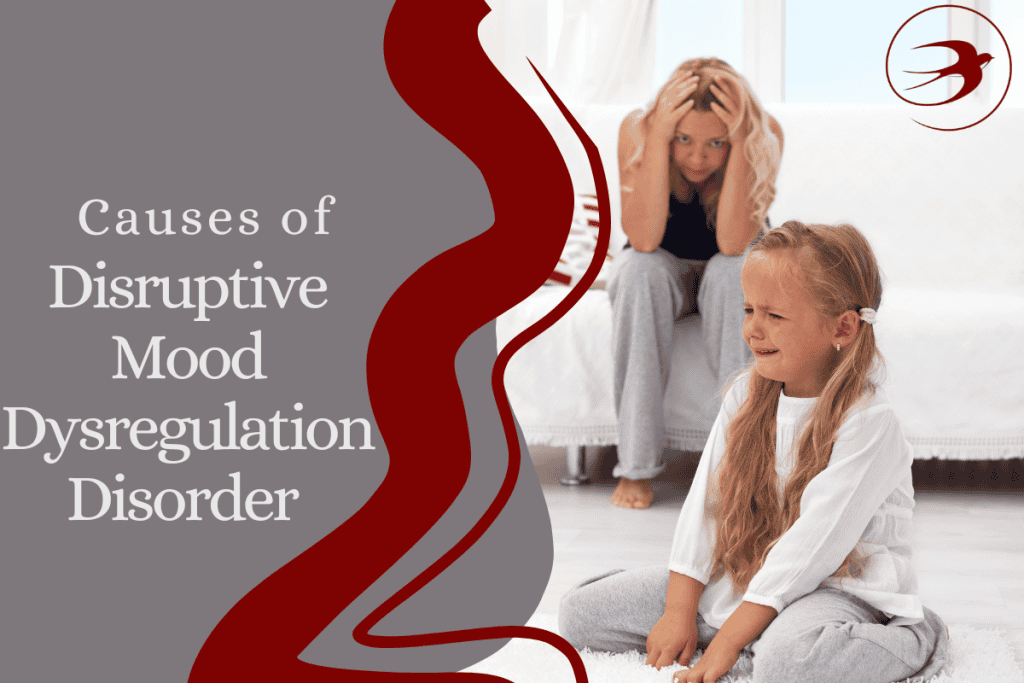
If your child or adolescent struggles with constant irritability, frequent temper outbursts, or an ongoing irritable or angry mood, one of the first questions that may come to mind is, “Why is this happening?” These patterns can feel confusing, especially when your child’s reactions seem more intense than those of other children and adolescents their age.
The truth is, Disruptive Mood Dysregulation Disorder (DMDD) is a mental health disorder and a type of mood disorder that does not have one single explanation. The questions of what causes Disruptive Mood Dysregulation Disorder are not always clear. Instead, DMDD may develop from a mix of emotional, environmental, and developmental factors. Children with DMDD symptoms often experience challenges that go beyond a typical outburst or loss of temper, making it different from concerns like oppositional defiant disorder, ADHD, or even bipolar disorder.
Understanding these patterns can help you respond with more clarity and compassion. It also helps you know when to connect with a mental health professional, explore treatment options, and support your child if they are diagnosed with DMDD. At Greater Love Counseling, we help families look beyond behavior and understand what may be happening underneath the surface.
There Is No Single Cause of DMDD
DMDD is a mental health disorder that is not caused by one event or one mistake.
Instead, it tends to develop from a combination of:
- Emotional regulation challenges
- Environmental stress
- Sensitivity to frustration
- Past overwhelming experiences

Children with DMDD often experience intense reactions, such as a sudden temper outburst, but these are not random. This means your child’s behavior is not just about a moment of temper, it’s often a response to something deeper.
Emotional Regulation Challenges
One of the biggest contributing factors in DMDD is difficulty regulating emotions.
This means a child may:
- Feel emotions more intensely than others
- Struggle to calm down once upset
- React quickly before thinking things through
- Have trouble shifting out of frustration
Children with DMDD often experience emotions that build quickly and can lead to a sudden temper outburst. For these children, feelings can become overwhelming, almost like a switch flips suddenly and intensely.
This is not a lack of discipline, it’s a skill that hasn’t fully developed yet within this disorder.
Sensitivity to Stress and Frustration
Children with DMDD often have a low frustration tolerance, which is one of the common child’s DMDD symptoms.
This can look like:
- Strong reactions to small problems
- Difficulty handling changes or transitions
- Becoming overwhelmed when things don’t go as expected
Children with DMDD may experience emotions more intensely than others. What may seem like a small issue to others can feel very big to them, reflecting irritability in youth with DMDD.
Environmental and Family Stress
A child’s environment plays a significant role in emotional development and may contribute to DMDD.
Stressors may include:
- Changes at home (moves, separation, instability)
- School-related challenges
- Social difficulties or peer conflict
- High-pressure or unpredictable environments
Even when families are doing their best, ongoing stress can impact how a child processes emotions. These causes and risk factors help us better understand the mental health condition and how DMDD in children develops over time.
The Role of Trauma and Overwhelming Experiences
Some children with DMDD have experienced situations that felt overwhelming, unsafe, or confusing. These are part of what causes disruptive mood dysregulation and can shape a child’s emotional responses.
This doesn’t always mean major trauma. It can include:
- Repeated stress
- Emotional overwhelm over time
- Feeling misunderstood or unsupported
Children with DMDD experience intense emotional reactions, and when a child’s nervous system becomes overloaded, it can lead to a sudden outburst or difficulty calming down. Over time, this can affect how they process and manage emotions.
At Greater Love Counseling, we often explore these deeper layers using trauma-informed approaches like EMDR as part of mental health treatment to help children process experiences and regain emotional balance.
Brain and Developmental Factors
DMDD is a disorder that affects children and adolescents, especially as they are still developing emotional and regulation skills.
Children are still learning how to:
- Manage strong emotions
- Understand their internal experiences
- Respond instead of react
Some children develop these skills more slowly or with more difficulty. This plays a role in developing DMDD and can influence the likelihood of developing DMDD over time.
This can be influenced by:
- Brain development
- Temperament
- Individual sensitivity
This is not a flaw—it’s part of how they are wired and how they are growing. With the right support and treatment options for DMDD, children can strengthen these skills and learn to better manage their emotions.
Why Understanding the Cause Matters
When we understand what’s underneath the behavior, our response begins to change.
Instead of:
- “Why are they acting like this?”
We begin to ask:
- “What are they feeling right now?”
- “What do they need in this moment?”
This shift can lead to more effective support and less frustration for everyone involved.
What This Means for You as a Parent
If your child is struggling, it’s easy to feel:
- Confused
- Overwhelmed
- Like you’re doing something wrong
But DMDD is not caused by “bad parenting.”
It’s a complex interaction of emotional, environmental, and developmental factors. And most importantly, it is something that can be supported with the right help.
How Healing Begins
Understanding what causes Disruptive Mood Dysregulation Disorder is just the first step.
The next step is helping your child:
- Learn emotional regulation skills
- Feel safe and understood
- Build healthier ways to respond
If you want to better understand how these patterns show up day-to-day, you can explore our guide on the symptoms of disruptive mood dysregulation disorder.
Final Thought
You don’t have to figure this out alone. If you’re trying to make sense of your child’s behavior, you’re not alone, and you don’t have to carry this on your own.
Support can make a real difference. With guidance, understanding, and the right tools, you and your child can begin to find clarity, calm, and a healthier way forward together.
Blessings,