A panic attack can feel as if something is seriously wrong, even when there is no clear danger around you. Your heart may race, your breathing may change, and fear can seem to take over within moments. For some people, the experience becomes even harder because they begin worrying about when the next attack will happen.
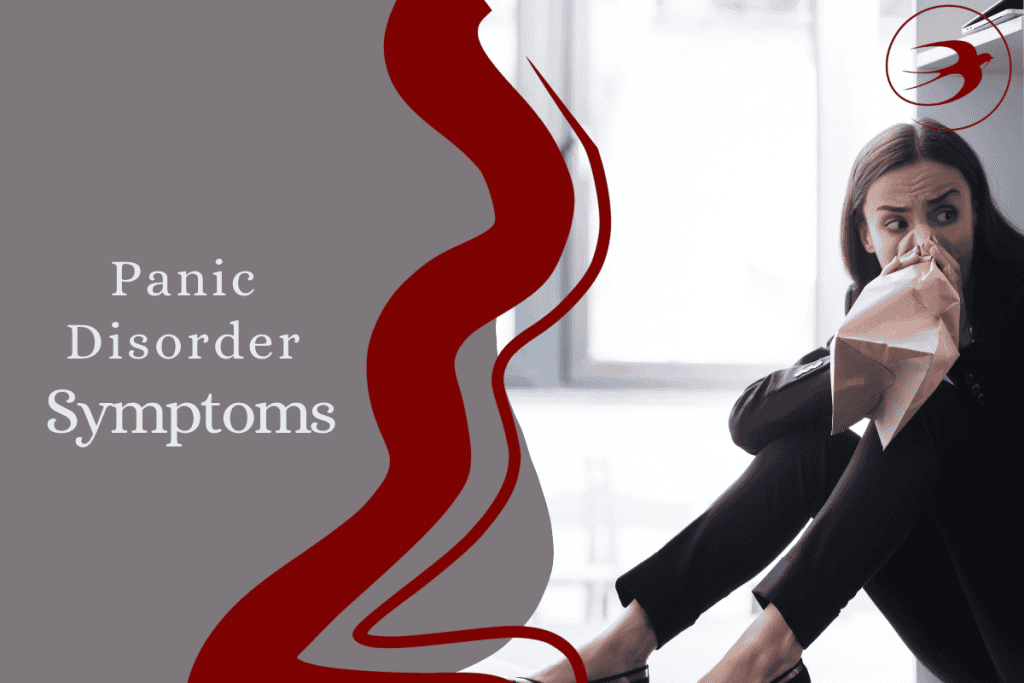
Panic Disorder Symptoms commonly include repeated, unexpected panic attacks along with ongoing fear of having another attack or changing your daily life to avoid one. During a panic attack, you may experience a racing heart, shortness of breath, shaking, sweating, dizziness, chest discomfort, nausea, numbness, or an intense fear of losing control or dying. It may be time to seek help when these symptoms keep returning, cause persistent worry, or begin interfering with work, relationships, travel, sleep, or other parts of daily life.
Although panic disorder can feel frightening, it is treatable. Learning to recognize the symptoms can help you better understand what your body and mind are experiencing and can be an important first step toward finding support.
What Are Panic Disorder Symptoms?
Panic disorder is an anxiety disorder that involves more than simply feeling nervous or stressed. One of its main features is having recurrent, unexpected panic attacks. These attacks can happen suddenly, sometimes without an obvious reason, and panic attacks may feel overwhelming even when there is no immediate danger.
During an episode, an attack may cause a racing heartbeat, shortness of breath, dizziness, trembling, chest discomfort, or a strong sense that something terrible is about to happen. After an attack, many people begin worrying about having another one. That worry can last long after the physical symptoms have passed.
You may start paying close attention to your heartbeat, breathing, dizziness, or other body sensations because you are afraid they might mean another attack is beginning. Over time, some people may develop panic disorder when repeated panic attacks are followed by ongoing fear, worry, or changes in behavior.
Panic disorder symptoms may eventually affect both how you feel and how you behave. You may avoid certain places, stop doing activities you once enjoyed, or stay close to places where you feel safe because you are worried another panic attack could happen.
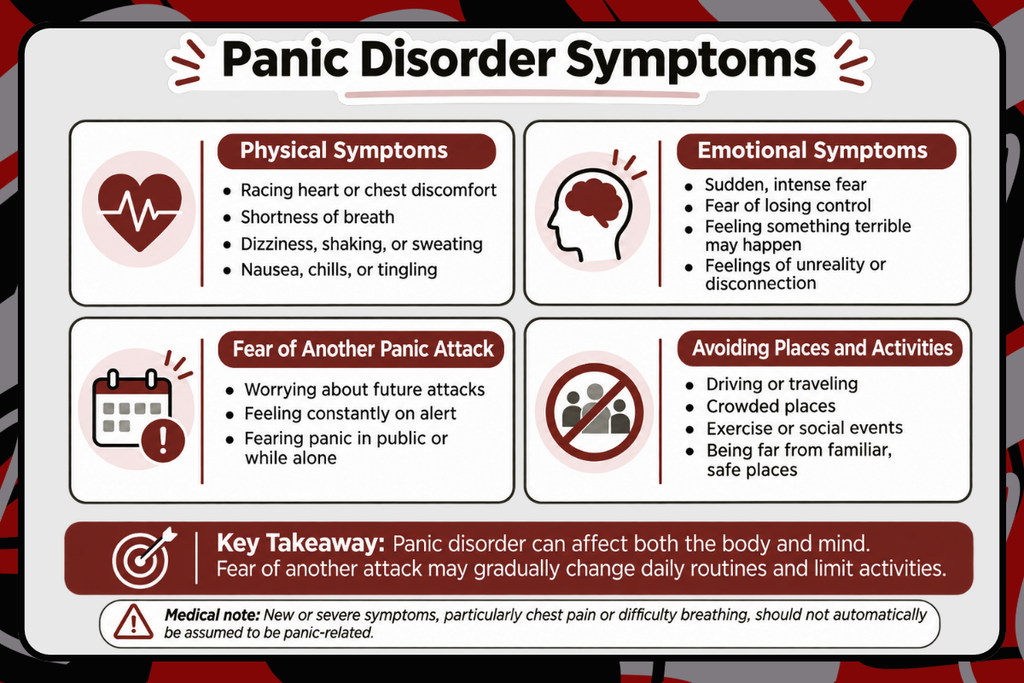
Physical Symptoms of Panic Disorder
Many Panic Disorder Symptoms are physical, which is one reason panic can feel so alarming. These panic attack symptoms can appear suddenly and may feel similar to symptoms caused by other health conditions.
When your brain senses danger, the body’s stress response becomes activated. Your heart may beat faster, your muscles may tense, and your breathing may change. These reactions are designed to help protect you from danger, but when panic attacks occur, they can happen even when there is no immediate threat.
For many people, a panic attack feels like an episode of intense fear combined with strong physical sensations. The symptoms usually become intense quickly, which can make it difficult to tell whether anxiety or another medical issue is causing your symptoms.
Racing Heart and Chest Discomfort
A fast, pounding, or noticeably strong heartbeat is one of the most common signs and symptoms people associate with panic.
You may also feel pressure, tightness, or discomfort in your chest. Because these sensations can resemble symptoms of a medical problem, they may quickly increase fear and anxiety.
That fear can create a cycle. You notice your heartbeat, become frightened by it, and then your body becomes even more activated. This can increase the sense of panic and make the physical sensations feel even stronger.
Shortness of Breath
During panic, breathing may become faster or more shallow. You may feel as though you cannot get enough air, even though you are still breathing.
Changes in breathing can also contribute to dizziness, tingling, chest discomfort, or feelings of unreality. These sensations are common when people experience a panic attack and can make the episode feel even more intense.
Dizziness, Shaking, and Sweating
Adrenaline can cause trembling, sweating, weakness, or feeling unsteady on your feet.
Some people describe feeling as though they might faint. Even when fainting does not occur, the sensation itself can be frightening enough to increase the panic response. The sudden combination of these physical and emotional symptoms can make it difficult to feel safe or in control.
Nausea and Other Body Sensations
Panic can also affect the digestive system and other parts of the body.
You may experience nausea, stomach discomfort, chills, hot flashes, numbness, or tingling in your hands, feet, or face. These panic-like symptoms can sometimes overlap with symptoms of other medical or mental health conditions, which is why persistent or unfamiliar symptoms should be evaluated when needed.
These symptoms are real physical sensations, even when anxiety is contributing to them. People who experience panic attacks may notice different combinations of symptoms from one episode to another.
Emotional Symptoms of Panic Disorder
Panic disorder is not only about what happens in the body. It can also cause powerful emotional symptoms, including sudden feelings of panic, intense fear or anxiety, and a strong sense that something terrible is about to happen.
During a panic episode, you may feel as though you are in immediate danger even when no clear threat is present. Even if part of you understands that you may be experiencing panic, the fear can still feel completely convincing. For someone with panic disorder, these emotional reactions can make each episode feel unpredictable and difficult to control.
You may think:
- “Something is seriously wrong.”
- “I’m going to pass out.”
- “I’m losing control.”
- “I’m going to die.”
- “I need to get out of here.”
Some people also experience feelings of unreality or disconnection. The room may seem strange, distant, or dreamlike. You may even feel temporarily disconnected from your own body.
These sensations can be unsettling, but they can occur as part of panic attacks and panic disorder. Over time, the fear of experiencing another episode may also lead some people to avoid future attacks by staying away from certain places, situations, or activities.
Fear of Having Another Panic Attack
One of the most important Panic Disorder Symptoms can happen when you are not having a panic attack at all.
After experiencing a frightening attack, you may begin worrying about when another one will happen. This ongoing fear is sometimes called anticipatory anxiety and is common in individuals with panic disorder. Because panic disorder often involves attacks that feel sudden or unpredictable, it can be difficult to feel fully at ease between episodes.
You might find yourself thinking:
- “What if I have another attack while driving?”
- “What if it happens at work?”
- “What if no one is there to help me?”
- “What if I embarrass myself in front of other people?”
This ongoing worry can keep your body and mind on alert. Instead of feeling safe between panic attacks, you may feel as though you are waiting for the next one.
You may also begin changing your routines in an effort to prevent panic attacks. For example, you might avoid driving, crowded places, being alone, or situations where you previously experienced panic. Although these changes may feel like a way to prevent panic, avoidance can gradually make your world feel smaller and reinforce the fear of another attack.
Avoiding Places and Activities Because of Panic
When people become afraid of another panic attack, they may begin avoiding situations they associate with panic.
You might stop:
- Driving long distances
- Shopping in crowded stores
- Exercising because a fast heartbeat feels frightening
- Traveling
- Going to restaurants
- Attending social events
- Being home alone
- Going far from people or places that feel safe
Avoidance often makes sense in the moment. If a situation frightened you before, staying away from it may seem like the safest option.
However, avoidance can gradually make your life feel smaller. The more situations you avoid, the more dangerous those situations may begin to feel.
Panic Disorder Symptoms and Agoraphobia
Some people with panic disorder may also experience agoraphobia.
Agoraphobia involves intense fear or avoidance of situations where escaping might feel difficult or where help may not seem readily available if panic symptoms occur.
A person may feel afraid of places such as crowded stores, public transportation, open spaces, enclosed spaces, or being away from home alone.
Not everyone with panic disorder develops agoraphobia. However, recognizing increasing avoidance is important because it can significantly affect independence and everyday life.
Panic Attack or Medical Emergency?
Because panic attacks can cause chest pain, shortness of breath, dizziness, weakness, and other strong physical symptoms, it can sometimes be difficult to know whether panic is responsible.
You should not automatically assume that a new or unusual physical symptom is anxiety.
Seek emergency medical care if you experience symptoms such as severe or unfamiliar chest pain, significant difficulty breathing, fainting, sudden weakness, or other symptoms that could indicate a medical emergency.
It is especially important to get medical help when symptoms are new, significantly different from your usual panic symptoms, or you are unsure what is happening.
Getting checked is not an overreaction. Physical health concerns deserve appropriate medical attention.
How Panic Disorder Symptoms Can Affect Daily Life
Repeated panic attacks can affect more than a few frightening moments. Over time, fear of panic may begin influencing many parts of your life.
You may have trouble concentrating at work because you are constantly monitoring your body. You may avoid traveling because you are afraid of being far from home. You might turn down invitations because you fear having an attack in front of other people.
Panic may also affect sleep. Some people worry about having symptoms at night, while others stay awake thinking about what happened during a previous attack.
Relationships can be affected too. Loved ones may want to help but may not fully understand why certain places or situations feel so difficult.
Sometimes, the fear of another attack becomes almost as disruptive as the panic attack itself.
How Panic Disorder Can Affect Your Faith
Panic can sometimes raise difficult spiritual questions.
You may wonder why you feel afraid even though you trust God. You might ask yourself whether stronger faith should make anxiety disappear. Some people even feel guilty because prayer has not stopped their panic symptoms.
Experiencing panic does not mean your faith is weak.
Your nervous system can become overwhelmed just as other parts of the body can become overwhelmed. Fear, stress, trauma, and physical responses can affect people of deep and sincere faith.
Prayer, Scripture, worship, supportive relationships, and connection with God may provide comfort and grounding. At the same time, professional counseling can help you understand the patterns behind panic and learn healthier ways to respond to them.
Faith and mental health care do not have to compete with one another. They can work together as part of a compassionate path toward healing.
When Should You Seek Help for Panic Disorder Symptoms?
You do not need to wait until panic completely takes over your life before seeking support.
Consider reaching out to a mental health professional if:
- Panic attacks keep happening
- You spend significant time worrying about another attack
- You avoid places or activities because of panic
- Fear is interfering with work, relationships, sleep, or daily responsibilities
- You constantly monitor your body for signs of another attack
- Your world is becoming smaller because you are afraid of panic
A mental health professional can help you better understand your symptoms and determine whether panic disorder or another condition may be contributing to what you are experiencing.
Treatment may also help you learn how to respond differently to physical sensations, fearful thoughts, and situations that have become associated with panic.
Can Panic Disorder Symptoms Get Better?
Yes. Panic disorder is treatable, and many people learn to experience significantly less fear and disruption with the right treatment for panic disorder.
Recovery does not necessarily mean that you will never feel anxious again. Instead, it may mean becoming less afraid of anxiety itself and learning how to respond differently when panic symptoms appear.
Psychotherapy can help you recognize what is happening in your body without immediately assuming something terrible is about to happen. One common approach is cognitive behavioral therapy, which can help you challenge fearful thoughts, build coping skills, and gradually return to situations that panic has caused you to avoid.
The most effective treatment for panic will depend on your symptoms, needs, and personal circumstances. Healing often happens one step at a time, and progress may look different for each person.
For people who value faith, recovery may also involve learning to approach fear with compassion rather than shame while leaning into spiritual practices that provide hope, connection, and meaning.
Final Thoughts
Panic Disorder Symptoms can feel intense and frightening. A racing heart, shortness of breath, dizziness, shaking, or an overwhelming sense of danger can make it seem as though you are losing control. But these symptoms can be understood, and effective support is available.
You do not have to organize your life around the fear of another panic attack. Reaching out for help can be an act of courage, wisdom, and care for the life God has given you. With compassionate counseling, practical tools, and faith-based support when desired, it is possible to move toward greater confidence, peace, and freedom.
If panic attacks or the fear of another attack are beginning to limit your life, you do not have to face them alone. Compassionate, faith-integrated counseling can help you understand what is happening and begin taking meaningful steps toward healing.
Blessings,