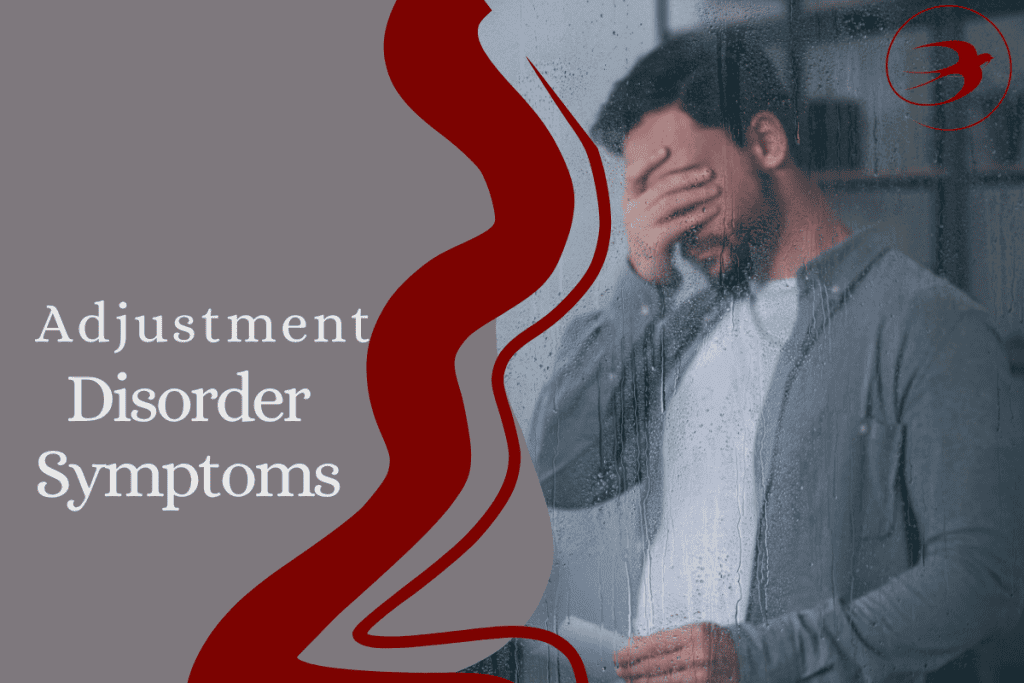
Adjustment disorder symptoms can show up after a stressful event, painful loss, or major life change, indicating a need for treatment for adjustment disorder. You may feel like you are not acting like yourself or like your emotions are harder to manage than usual.
Adjustment disorder symptoms can affect your mood, body, behavior, relationships, and even your spiritual life. Some people feel sad or anxious. Others feel angry, numb, withdrawn, or overwhelmed by things they used to handle more easily.
These symptoms do not mean your faith is weak. There may be signs that your mind, body, and spirit are trying to respond to stress, loss, or change.
What Are the Symptoms of Adjustment Disorder?
The symptoms of adjustment disorder often begin after a clear stressor or difficult life event. This could be a breakup, job loss, family conflict, move, medical diagnosis, grief, financial stress, or another major life change. For some people, symptoms may begin within three months of the stressful event.
A person may feel more emotional than usual, more anxious than usual, or less able to cope with daily life, which can be a sign of adjustment disorder with anxiety. Some people may also experience adjustment disorder with depressed mood or mixed anxiety and depressed mood. The emotional or behavioral reaction may feel stronger than expected, and it may start to affect work, school, relationships, sleep, or responsibilities.

Adjustment disorder symptoms can look different for each person. Common symptoms may include feeling sad, anxious, irritable, restless, or shut down. Some people notice changes in their bodies or behavior before they realize how much stress they are carrying. A mental health professional can help determine whether the symptoms fit the criteria for adjustment disorder and what support may help.
Emotional Symptoms of Adjustment Disorder
Emotional symptoms are often the most noticeable signs of adjustment disorder. You may feel like your emotions are closer to the surface or harder to control. Because adjustment disorder is a mental health condition connected to stress, the emotional response may feel stronger than expected for the situation.
Common emotional symptoms may include:
- Sadness
- Tearfulness
- Worry
- Anxiety
- Irritability
- Anger
- Hopelessness
- Feeling overwhelmed
- Feeling numb
- Trouble concentrating
- Mood swings
Some people cry more often than usual. Others feel tense, restless, or afraid. Some feel emotionally flat, like they cannot fully feel anything at all. In some cases, symptoms include depressive symptoms, anxiety, or a mixed disturbance of emotions.
For people of faith, this can bring guilt. You may think, “I should have more peace,” or “I should be handling this better.” But emotional pain is not a sign that God has left you. It is a sign that something inside you needs care and healthier coping skills.
Feeling Sad, Hopeless, or Defeated
Adjustment disorder can sometimes show up as a depressed mood. This means sadness, discouragement, or hopelessness may become the main symptoms after a clear stressor or difficult life change.
This may look like crying more often, feeling heavy, losing interest in normal activities, feeling unmotivated, or pulling away from people. Small tasks may feel harder than they used to.
This kind of sadness may be connected to a specific event or season of life. For example, someone may feel this way after a divorce, death, job loss, illness, or major transition, all of which can trigger symptoms of an adjustment disorder. Some people may also develop adjustment disorder when several risk factors, such as ongoing stress, past loss, or limited support, make the situation harder to carry.
You can trust God and still feel grief. You can believe in hope and still feel tired. Faith does not require you to pretend that pain does not hurt.
Feeling Anxious, Worried, or On Edge
Adjustment disorder can also show up as anxiety after a clear stressor. Instead of feeling mainly sad, you may feel nervous, tense, or unable to calm your thoughts.
Anxiety symptoms may include racing thoughts, constant worry, trouble relaxing, fear about the future, restlessness, difficulty sleeping, and trouble making decisions. This can be one of the subtypes of adjustment disorder, depending on the main symptoms a person is experiencing.
You may find yourself replaying conversations, worrying about money, fearing another loss, or feeling unsure about what to do next.
Prayer may even feel harder during this time, especially for those experiencing symptoms of an adjustment disorder. You may try to pray, but your mind keeps racing. This does not mean you are praying wrong. It may mean your nervous system is overwhelmed and needs support.
Irritability, Anger, or Short Temper
Not everyone with adjustment disorder looks sad or anxious. Some people become more irritable, impatient, or angry, especially after ongoing stress or a difficult event.
This may look like snapping at loved ones, arguing more often, feeling easily annoyed, or getting overwhelmed by small things. You may feel frustrated by noise, requests, interruptions, or responsibilities that normally would not bother you.
Anger can sometimes be easier to feel than sadness or fear. Under the anger, there may be grief, disappointment, fear, exhaustion, or feeling out of control. In some cases, adjustment disorder may involve both emotions and conduct, especially when emotional distress starts affecting behavior.
If you feel more irritable than usual after a stressful event, it may be worth paying attention to what your anger is trying to protect.
Physical Symptoms of Adjustment Disorder
Stress does not only live in the mind; it can also manifest as physical symptoms that affect mental health. It can also show up in the body, especially when someone is dealing with adjustment disorder or ongoing stress.
Physical symptoms of adjustment disorder may include:
- Trouble sleeping
- Fatigue
- Headaches
- Muscle tension
- Stomach discomfort
- Changes in appetite
- Chest tightness
- Feeling shaky
- Low energy
- Restlessness
You may feel tired but unable to rest. You may feel hungry but have little appetite. You may feel tense even when nothing stressful is happening in the moment. For some people, this can become more noticeable when stress lasts longer, such as with chronic adjustment disorder.
These symptoms can be frustrating, but they are not “all in your head.” Stress can affect the whole body. If physical symptoms are new, severe, or concerning, it is wise to speak with a medical provider.
Behavioral Symptoms of Adjustment Disorder
Behavioral symptoms are changes in how a person acts after stress. These changes may be noticed by the person, family members, friends, coworkers, or teachers.
Common behavioral symptoms may include withdrawing from others, avoiding responsibilities, missing work or school, procrastinating more than usual, crying often, arguing more often, neglecting self-care, or losing interest in normal activities. When behavior changes are more noticeable, this may sometimes be described as adjustment disorder with disturbance or adjustment disorder with mixed disturbance.
Sometimes these behaviors are attempts to escape emotional pain. A person may not be trying to be difficult or irresponsible. They may be overwhelmed and unsure how to cope. For a child and adolescent, support may include family therapy, especially when stress is affecting both emotions and behavior.
Social Withdrawal
One common sign of adjustment disorder is pulling away from others. You may stop answering messages, cancel plans, avoid church, or feel too drained to explain how you are doing.
Sometimes people withdraw because they feel ashamed. They may not want others to see them struggling. They may also feel like no one would understand. When withdrawal happens alongside emotional distress and behavior changes, it may be part of a disturbance of emotions and conduct.
But isolation can make emotional pain feel heavier. Safe support can help you feel less alone, even if you are not ready to share everything.
Spiritual Signs of Adjustment Disorder
For people of faith, adjustment disorder may also affect spiritual life. Stress can make it harder to feel connected to God, even when faith still matters deeply. In this way, adjustment disorder can feel similar to a stress disorder, because emotional pressure may affect the mind, body, and spirit.
Spiritual signs may include feeling distant from God, feeling numb during prayer or worship, avoiding church or spiritual community, feeling guilty for struggling, wondering if God is disappointed, or feeling ashamed of sadness, anxiety, or doubt.
These signs can feel scary, especially if prayer, church, or Scripture have usually been sources of comfort.
But spiritual struggle does not mean you have failed. Many people experience seasons where faith feels harder because life feels heavier. God is not surprised by your grief, questions, or exhaustion.
When Symptoms May Be a Sign to Get Help
It may be time to seek support if symptoms are affecting daily life, relationships, work, school, sleep, faith, or self-care.
If you are not feeling like yourself, feel overwhelmed most days, withdraw from people, cry often, feel anxious or on edge, feel more irritable than usual, or struggle to keep up with responsibilities, please reach out.
You do not have to wait until everything falls apart. Therapy can help you understand what is happening before symptoms intensify. In some cases, a person may receive a diagnosis such as adjustment disorder unspecified when symptoms cause distress but do not fit neatly into one specific subtype.
If you are having thoughts of harming yourself or someone else, seek immediate help from emergency services, a crisis line, or a trusted person nearby.
Final Thoughts
Adjustment disorder symptoms can affect your emotions, body, behavior, relationships, and spiritual life. You may feel sad, anxious, irritable, tired, withdrawn, or distant from God after a stressful event or major life change.
These symptoms are not a personal or spiritual failure. There are signs that your whole self may need care. Faith-based therapy can help you understand what you are experiencing, process the stress, and begin moving toward healing with honesty, support, and hope.
Blessings,